AI Answering Services for Small Businesses: What They Do and How to Scope Them
AI answering services can support routine call handling, booking, and follow-up. The better question is not a published price—it is whether the service fits your call volume, customer expectations, workflow, and escalation requirements.
Editorial Note
This guide is educational. Any workflow examples, operational estimates, or financial illustrations should be validated against your own systems and data; they are not AI Strategy Partners client results or a promise of performance. Where sources are linked, they support the specific external context cited.
The Missed Call Problem Is Bigger Than You Think
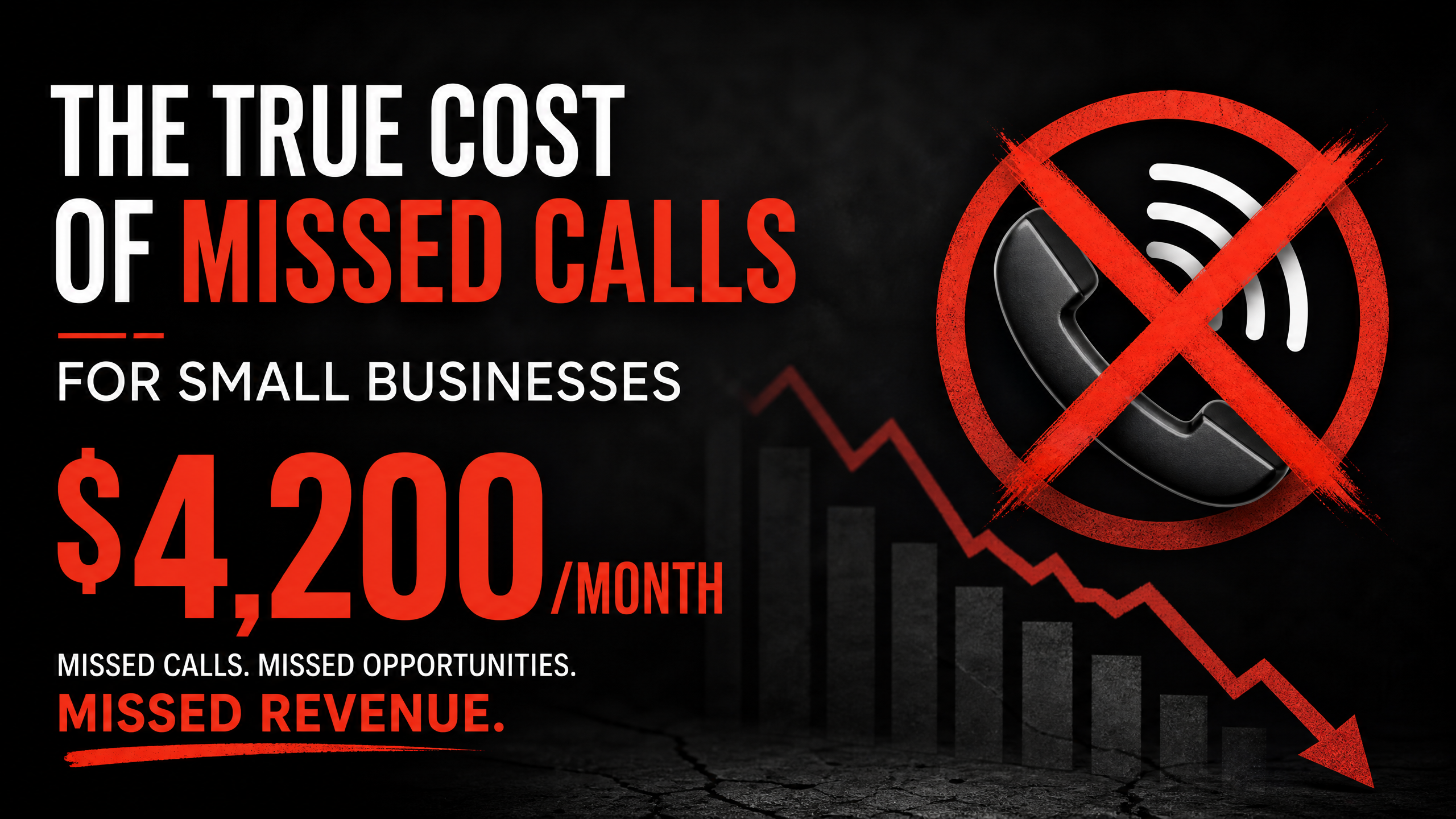
The average local service business misses 35–45% of inbound calls. That number sounds high until you think about when your customers call: 7am before your crew leaves, 9pm after a pipe bursts, Saturday afternoon when you're on a job, and every minute you're on another call. Each missed call is a potential job. For an HVAC company with an average ticket of $450, missing 20 calls per month means $9,000 in potential revenue that walked out the door — before you even had a chance to answer. Traditional answering services solve part of this problem. A human answering service costs $250–$500/month and can take messages, but they can't qualify leads, answer technical questions, or book appointments in your scheduling system. AI answering services can do all three — 24 hours a day, 7 days a week, without a lunch break or a sick day.
What an AI Answering Service Actually Does
An AI answering service is a voice agent — a software system that answers your business phone, converses naturally with callers, qualifies the lead, answers common questions, and books appointments directly into your scheduling system. When a customer calls your HVAC company at 11pm because their AC stopped working, the AI answers immediately, asks what's happening, confirms their address and service area, checks your calendar, and books a next-day appointment — all while the customer is still on the call. The AI doesn't read from a script. It understands context, handles interruptions, and responds naturally to follow-up questions. Modern AI voice agents are trained on thousands of real service business calls and can handle the most common scenarios: new service requests, appointment scheduling, quote requests, existing customer follow-up, and emergency service routing.
How to Scope an AI Answering Service
AI answering service scope varies based on call volume, integration complexity, and whether a business needs a self-serve platform or a custom-built implementation. Simpler booking flows can use a lighter setup, while complex scenarios may require field-service software integration, specific qualification rules, and a human escalation plan. Review the workflow, data access, and support expectations before selecting an approach.
How to Measure Whether It Is Helping
Measure an AI answering service through operational outcomes: answer rate, time to first response, appointments booked, calls escalated appropriately, message quality, and staff time recovered. The right implementation should improve follow-through without creating a poor caller experience or weakening human accountability.
What to Look for in an AI Answering Service Implementation
Not all AI answering services are equal. The difference between a system that books jobs and one that frustrates callers comes down to five factors. First, natural conversation quality — the AI should sound like a knowledgeable team member, not a phone tree. Ask to hear a live demo call before committing. Second, scheduling system integration — the AI must connect directly to your existing scheduling software. If it can only take messages and email them to you, it's not meaningfully different from a traditional answering service. Third, qualification logic — the system should be configured to ask your specific qualifying questions (service area, type of problem, urgency level) and route calls accordingly. Fourth, after-hours handling — this is where the ROI is highest. Make sure the system handles emergency calls differently from routine appointment requests. Fifth, call recording and reporting — you should be able to review every call, see booking rates, and identify where callers are dropping off.
AI Answering Service vs. Traditional Answering Service vs. Hiring
The comparison is clearer than most business owners expect. A traditional answering service takes messages and forwards them — the customer still has to wait for a callback, and you still have to make the call. Conversion rates from message-taking services are significantly lower than from live booking. Hiring a receptionist solves the live booking problem but costs 4–6x more than an AI service, only covers business hours, and introduces turnover risk. An AI answering service answers every call immediately, books appointments in real time, costs less than a part-time employee, and never calls in sick. The only scenario where a human receptionist clearly outperforms an AI is when your calls are highly complex, require significant judgment, or involve sensitive customer situations that benefit from human empathy. For standard service booking — HVAC, plumbing, cleaning, pool service, pressure washing — AI handles the job well.
How to Get Started Without Wasting Money
The most common mistake is buying a SaaS AI answering platform, spending a weekend trying to configure it, and abandoning it when it doesn't perform. AI answering services require proper setup: your qualification questions need to be defined, your scheduling integration needs to be tested, your after-hours routing needs to be configured, and the AI needs to be trained on your specific services, pricing, and service area. The businesses that get the best results work with an implementation partner who configures the system for their specific business, tests it against real call scenarios before going live, and monitors performance in the first 30 days to optimize the booking flow. A properly implemented AI answering service should achieve a 60–80% booking rate on qualified inbound calls within the first 60 days.
Ready to Find Your Revenue Leaks?
Find out exactly how much your business is losing from missed calls — and whether an AI answering service makes financial sense for your call volume and ticket size.
Free audit · No credit card · Results in 5 minutes